Two profit figures with different scopes
Gross profit is revenue minus cost of goods sold, using the classifications in your accounts. Net profit takes the broader set of expenses and other items included in the statement into account. Both can be useful, but they describe different stages of the same business results.
When comparing reports, first read the definitions. A product’s contribution after packaging and transaction fees is not necessarily the gross profit line in your accounting statement. A clear label is more useful than a precise-looking percentage calculated from mismatched categories.
Work through a simple period
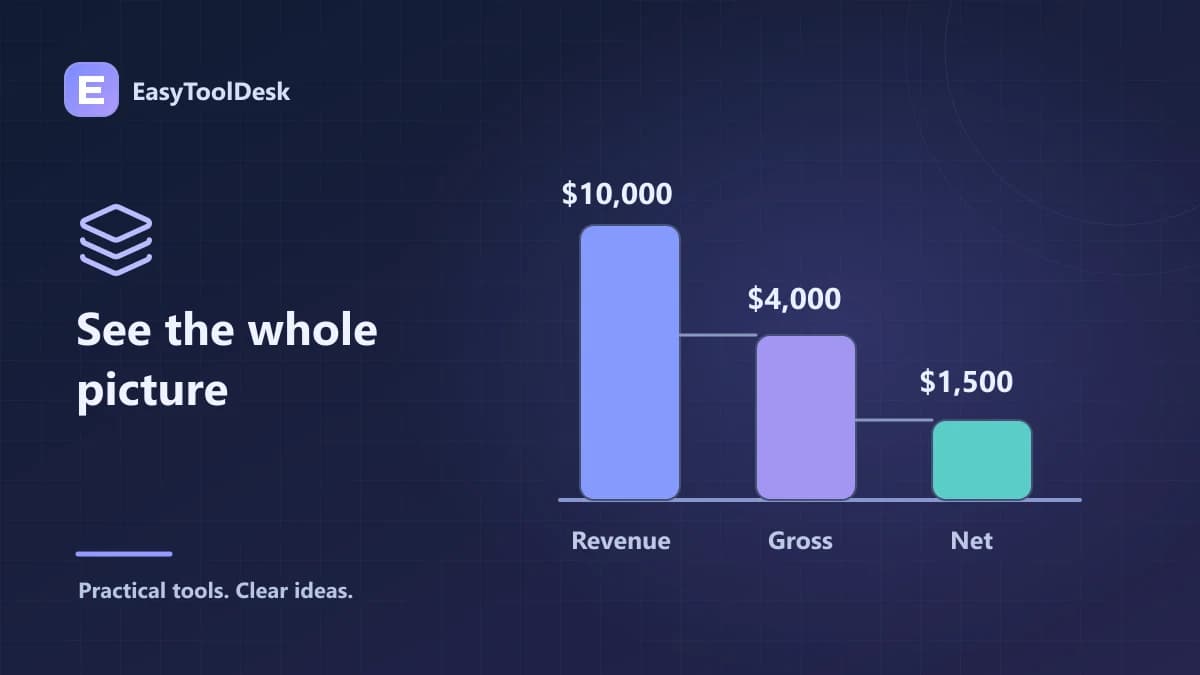
Suppose a business reports revenue of $10,000 and cost of goods sold of $6,000 for one month. Gross profit is $10,000 − $6,000 = $4,000. Gross margin is $4,000 ÷ $10,000 × 100 = 40%.
For an intentionally simplified example, assume all remaining expenses included in the comparison total $2,500, with no other income or adjustments. Subtracting them leaves $1,500. The resulting net margin on those assumptions is $1,500 ÷ $10,000 × 100 = 15%. Real statements may separately present operating profit, interest, tax, or other items.
What the difference can reveal
A business can have a healthy-looking gross margin while retaining little after overhead. The $4,000 in this example must cover the expenses below gross profit before the final result is reached. Conversely, a lower gross margin does not reveal the full outcome without the rest of the cost structure.
To investigate a change, compare both dollars and percentages across comparable periods. Revenue growth can increase gross profit dollars even if the margin percentage falls. A percentage can rise while total profit falls if sales volume declines sharply enough.
Keep the comparison consistent
Use revenue and expenses from the same reporting period.
Avoid mixing a product-level estimate with whole-business overhead without explaining the allocation.
Use consistent treatment of refunds, discounts, and cost classification.
Check whether the figure includes or excludes tax and financing items.
Keep cash flow separate: profit and cash received are not automatically the same measure.
Frequently asked questions
Can net profit exceed gross profit? Additional income or adjustments can change the relationship. The simplified example above assumes none. Read the complete statement rather than treating the example as a universal accounting layout.
Which margin belongs in a product price calculator? EasyToolDesk’s product-pricing target is contribution after the listed variable costs and fees. It should not be described as a guaranteed whole-business net margin.
For a product-level model, see product pricing with fees and make the expense scope explicit.